Speach Recognition

To start voice dictation in Windows 11, you can press the Win+H keys together to open the Voice typing tool. Alternatively, you can go to Settings > Accessibility > Speech, and turn on the switch for Windows Speech Recognition. Once enabled, you can click the microphone icon to start dictation in any application where you can type text.

This article is for people who want to control their PC and author text using their voice with Windows. This article is part of the Accessibility support for Windows content set where you can find more information on Windows accessibility features. For general help, visit Microsoft Support home.

Voice access is a feature in Windows 11 that enables everyone to control their PC and author text using only their voice and without an internet connection. For example, you can open and switch between apps, browse the web, and read and author email using your voice. For more information, go to Use voice access to control your PC & author text with your voice.

Voice access is available in Windows 11, version 22H2 and later. For more information on Windows 11 22H2 new features, and how to get the update, see What’s new in recent Windows updates. Not sure which version of Windows you have? See: Find Windows version.

Dictate punctuation marks

To insert thisSay this
.“Period”
“Full stop”
,“Comma”
?“Question mark”
!“Exclamation mark”
“Exclamation point”
‘s“Apostrophe-s”
:“Colon”
;“Semicolon”
” ““Open quotes”
“Close quotes”
“Hyphen”
“Ellipsis”
“Dot dot dot”
‘ ‘“Begin single quote”
“Open single quote”
“End single quote”
“Close single quote”
( )“Left parentheses”
“Open parentheses”
“Right parentheses”
“Close parentheses”
[ ]“Open bracket”
“Close bracket”
{ }“Left brace”
“Open brace”
“Right brace”
“Close brace”

Dictate symbols

To insert thisSay this
*“Asterisk”
\“Backslash”
/“Forward slash”
|“Vertical bar”
“Pipe character”
_“Underscore”
“Paragraph sign”
“Paragraph mark”
§“Section sign”
&“Ampersand”
“And sign”
@“At sign”
©“Copyright sign”
®“Registered sign”
°“Degree symbol”
%“Percent sign”
#“Number sign”
“Pound sign”
+“Plus sign”
“Minus sign”
דMultiplication sign”
÷“Division sign”
=“Equals sign”
< >“Less than sign”
“Greater than sign”
$“Dollar sign”
£“Pound sterling sign”
“Euro sign”
¥“Yen sign”

Manage voice access and microphone

To do thisSay this
Get voice access to listen to you.“Voice access wake up”
“Unmute”
Put voice access to sleep.“Voice access sleep”
“Mute”
Turn off the voice access microphone.“Turn off microphone”
Close voice access.“Turn off voice access”
“Stop voice access”
“Close voice access”
“Exit voice access”
“Quit voice access”
Find out what command to use.“What can I say”
“Show all commands”
“Show command list”
“Show commands”
Access voice access settings menu.“Open voice access settings”
Access voice access help menu.“Open voice access help”
Access the voice access tutorial.“Open voice access guide”
Switch to commands only mode.“Commands mode”
“Switch to command mode”
Switch to dictation only mode.“Dictation mode”
“Switch to dictation mode”
Switch to default mode (command and dictation).“Default mode”
“Switch to default mode”

Interact with apps

To do thisSay this
Open a new app.“Open <app name>”
“Start <app name>”
“Show <app name>”
Close an open app.“Close <app name>”
“Close window”
“Exit <app name>”
“Quit <app name>”
Switch to an existing app.“Switch to <app name>”
“Go to <app name>”
Minimize a window.“Minimize window”
“Minimize <app name>”
Maximize a window.“Maximize window”
“Maximize <app name>”
Restore a window.“Restore window”
“Restore <app name>”
Open task switcher.“Show task switcher”
“List all windows”
“Show all windows”
Go to desktop.“Go to desktop”
“Go home”
“Minimize all windows”
Search on the browser, where “search engine” can be Bing, Google, or YouTube, and “x” is what you’re looking for.“Search on <search engine> for <x>”
Snap window to a specific direction, where “direction” is left, right, top-left, top-right, bottom-left, or bottom-right.“Snap window to <direction>”
“Snap the window to <direction>”
To search for an entity (Entity can be a file or an application) on your windows PC.“Search <Entity>”
“Search Windows for <Entity>”
“Search for <Entity>”

Interact with controls

To do thisSay this
Select an item.“Click <item name>”
“Tap <item name>”
Double-click an item.“Double-click <item name>”
“Mouse double-click”
Put focus on an item.“Move to <item name>”
“Focus on <item name>”
Expand a list.“Expand <item name>”
Toggle between states.“Toggle <item name>”
“Flip <item name>”
Scroll in a specific direction.“Scroll <direction>”
Start scrolling in a specific direction.“Start scrolling <direction>”
Stop scrolling.“Stop scrolling”
“Stop”
Move a slider in a specific direction by a certain distance, where “direction” is up, down, left, or right and “value” is the distance.“Move slider <direction> <value> times”

Apache Log4j

Is Apache Log4j Installed

To determine if Apache Log4j is installed on your system, you can use a combination of manual and automated methods. For Linux servers, you can run a command to search for files related to Log4j:

find / -type f -name log4j*

This command will list all files containing “log4j” in their names, which can help identify if Log4j is installed on your server.8

For Windows servers, you can use a similar approach by searching for files containing “log4j” in their names:

dir C:\*log4j*.jar /s

This command will search for files with “log4j” in their names in the C: drive and its subdirectories.3

Automated tools can also be used to scan for Log4j installations. One such tool is Syft, which can create a software bill of materials (SBOM) and help identify old Log4j versions:

syft dir:/ | grep log4j

This command will scan your server and search for Log4j files.3

Additionally, you can use a Python script or a Go package like log4jscanner to scan your system for vulnerable Log4j versions.43

Since Log4j is a Java library, it may be embedded within other Java applications, making it harder to detect. Therefore, it’s important to check all Java applications running on your system and consult their vendors for any dependencies on Log4j.3

For a more thorough check, you can also manually inspect the manifest files within JAR files to confirm the version of Log4j installed.3

Remember, these methods may not be foolproof, as Log4j can be embedded within other JAR files or applications. Therefore, it’s crucial to follow up with vendor advisories and ensure all applications are updated to the latest versions.

Mass scanning for Log4J in progress.

Remote execution in NSA code Ghidra Log4J.

NSA will release Apache, Log4J, Ghidra.It will burn every computer from the inside

Taking down the whole internet with Ghidra?

Microsoft tools used to hack

Hackers use Microsoft’s tools to slip past antivirus

Hackers use Microsoft's tools to slip past antivirus
Microsoft tools used to hack

Trend Micro has identified Earth Preta, also known as Mustang Panda, as the Chinese hacking group using Microsoft’s Application Virtualization Injector to bypass antivirus defenses by injecting malicious code into legitimate processes. Earth Preta has been focusing most of its attacks on systems in Taiwan, Malaysia and Vietnam.

Full Story: TechRadar Pro (2/20) 

Risk Communication

Cyber Risk Communication Document

Creating a cyber risk communication document involves several steps to ensure that all stakeholders are informed effectively about potential risks and how to mitigate them.

Here’s a structured approach based on the provided context:

  1. Identify the Audience: Determine who the document is for, such as executives, board members, employees, or clients. Tailor the language and level of detail to suit each audience’s needs and understanding.
  2. Gather Information: Collect data on current risks, threat landscapes, and any ongoing or past incidents. Include details on the organization’s cybersecurity posture and any existing controls or measures in place.
  3. Structure the Document: Organize the information logically. Start with an executive summary that highlights key risks and recommendations. Follow with detailed sections on each risk, including its potential impact, likelihood, and proposed mitigation strategies.
  4. Use Clear and Concise Language: Avoid technical jargon that might confuse non-technical stakeholders. Present information in a way that is easy to understand and actionable.
  5. Include Visual Aids: Use graphs, charts, and other visual aids to make complex information more accessible. For example, a proximity resilience graph can help illustrate the organization’s resilience against specific threats and risk impacts.
  6. Provide Context: Explain why each risk is significant and how it could affect the organization. This helps stakeholders understand the urgency and importance of addressing the risks.
  7. Recommend Mitigation Strategies: Offer specific steps that can be taken to reduce the likelihood or impact of identified risks. Include both immediate actions and long-term strategies.
  8. Review and Update Regularly: Cyber threats evolve rapidly, so the document should be reviewed and updated regularly to reflect new risks and changes in the threat landscape.
  9. Communicate Proactively and Reactively: In addition to the document, maintain regular communication channels to keep stakeholders informed about ongoing risks and any new developments. This could include regular updates, incident alerts, and educational content.
  10. Test the Plan: Conduct regular drills and simulations to test the effectiveness of the communication plan and make necessary adjustments.

Governance, Risk, and Compliance

Creating a GRC Template

Creating a GRC (Governance, Risk, and Compliance) template involves several steps to ensure it aligns with organizational goals and needs. Here’s a guide based on the provided context:

  1. Define Objectives and Scope: Clearly define the objectives and scope of your GRC framework. This includes understanding the potential benefits of a successful GRC framework, such as better alignment between departments and broader business goals, ensuring all types of risk have mitigating processes in place, and faster decision-making surrounding business processes and procedures.3
  2. Identify Stakeholders: Engage all relevant stakeholders to ensure their needs and concerns are addressed. This includes aligning executive team members with vital factors such as budget and roll-out timelines.3
  3. Assess Existing GRC Processes: Evaluate your current GRC processes to identify what is working and what needs improvement. This helps in pinpointing what processes should be retained and which should be removed to streamline the framework.3
  4. Design the Template: Use a template that includes the three main components of GRC: governance, risk management, and compliance. Ensure the template is easy to understand and use. A template with a circular theme, presenting four nodes and their interactions, can be effective.24
  5. Customize the Template: Customize the template to fit the specific needs of your organization. This may involve modifying text areas, shapes, and colors to better represent your GRC strategy.2
  6. Implement and Communicate: Implement the GRC framework and communicate the changes to all relevant teams. Provide regular updates and a transparent process for feedback to ensure smooth adoption.3
  7. Review and Refine: Continuously review and refine the GRC framework based on feedback and changing organizational needs. This ensures the framework remains effective and relevant.3

By following these steps, you can create a comprehensive and effective GRC template that aligns with your organization’s goals and enhances its governance, risk management, and compliance efforts.

Windows 11 Voice

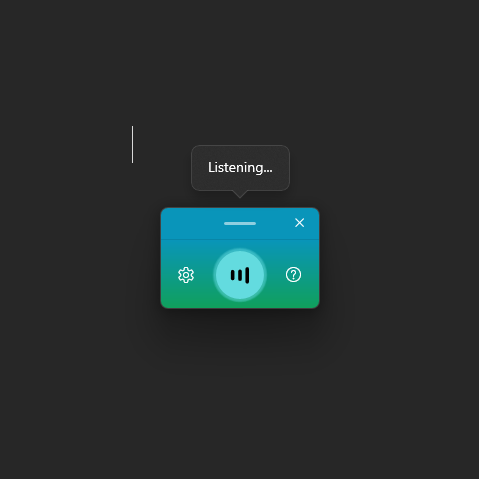
Voice typing interface with the message that says “Listening…”Want to type using your voice?
Just select WIN + H to open voice typing — great for long form text, or just if you have a word you can’t spell. Learn more about how to use it  ❯

With voice typing, you can enter text on your PC by speaking. Voice typing uses online speech recognition, which is powered by Azure Speech services.

How to start Voice Typing

To use voice typing, you’ll need to be connected to the internet, have a working microphone, and have your cursor in a text box.

Once you turn on voice typing, it will start listening automatically. Wait for the “Listening…” alert before you start speaking.

To turn on voice typing:

  • Press Windows logo key on a hardware keyboard
  • Press the microphone key next to the Spacebar on the touch keyboard

To stop voice typing:

  • Say a voice typing command like “Stop listening”
  • Press the microphone button on the voice typing menu

Note: Press Windows logo key Alt to navigate through the voice typing menu with your keyboard. 

Install a Language

You can use a voice typing language that’s different than the one you’ve chosen for Windows. Here’s how:

  1. Select Start Settings Time & language Language & region.
  2. Find Preferred languages in the list and select Add a language.
  3. Search for the language you’d like to install, then select Next.
  4. Select Next or install any optional language features you’d like to use. These features, including speech recognition, aren’t required for voice typing to work.

To see this feature’s supported languages, see the list in the following article.

Switch Language

To switch voice typing languages, you’ll need to change the input language you use. Here’s how:

Press the language switcher in the bottom right of the touch keyboard

Select the language switcher in the corner of your taskbar

Press Windows logo key Spacebar on a hardware keyboard

Voice typing Commands

Use voice typing commands to quickly edit text by saying things like “delete that” or “select that”.

The following list tells you what you can say. To view supported commands for other languages, change the dropdown to your desired language.

Select your desired language

Voice typing commandWhat you can say
Stop or pause voice typingPause voice typing
Pause dictation
Stop voice typing
Stop dictation
Stop listening
Stop dictating
Stop voice mode
Pause voice mode
Delete last spoken word or phraseDelete that
Erase that
Ignore that
Select last spoken word or phraseSelect that
Press EnterPress Enter
Press BackspaceBackspace
Press Backspace
Press TabTab
Press Tab
Press SpaceInsert Space
Press Space

Note: If a word or phrase is selected, speaking any of the “delete that” commands will remove it.

Punctuation Commands

Use voice typing commands to insert punctuation marks.

The following list tells you what you can say. To view supported commands for other languages, change the dropdown to your desired language.

Select your desired language

To Insert thisSay this
begin/open single quote
end/close single quote
Hyphen
minus sign
n-dash
m-dash
!exclamation mark/point
#number/pound sign
$dollar sign
%Percent sign
&ampersand, and sign
(left/open parentheses
)right/close parentheses
*asterisk
,comma
.period, full stop
ellipsis, dot dot dot
/forward slash
:colon
🙁frowny face
🙂smiley face
;semicolon
😉winky face
?question mark
@at sign, at mention
[left/open (square) bracket
\backslash
]right/close (square) bracket
^caret symbol
_underscore
`backquote, backtick
{left/open (curly) brace
|vertical bar sign/character, pipe character
}right/close (curly) brace
~tilde symbol
open quotes
close quotes
£pound sterling sign
¥yen sign
euro sign
+plus sign
<less than sign, left/open angle bracket
<3heart emoji
=equal sign
>greater than sign, right/close angle bracket
±plus or minus sign
×multiplication sign
÷division sign
§section sign
©copyright sign/mark
®registered sign
°degree symbol/sign
paragraph sign/mark
new linenew/next line
new paragraphnew paragraph
‘sapostrophe-s

Installing PowerShell on Linux

What is PowerShell?

You may think of PowerShell as the command-line interface and scripting language on Windows, did you know that you can use it on Linux? Here’s how to take advantage of cross-platform commands and scripting

PowerShell is a command and scripting language created by Microsoft to replace the old Command Prompt. While it’s primarily associated with Windows, as part of the company’s continuing attempts to make pigs fly, they’ve made it available for Linux.

PowerShell can be used like any other shell in Linux to launch commands and to write scripts. While it has verbose commands by default, it understands common aliases like “ls” in Linux and “dir” in Windows to list a directory. It’s also object-oriented instead of relying on text streams. This makes it more complicated than the traditional Unix Philosophy solution of redirecting text input and output.

Why Install PowerShell on Linux?

The reason you might want to install PowerShell on Linux is that it gives you options. Linux already has lots of scripting languages, including the classic shells like Bash as well as more advanced languages like Perl and Python.

If you primarily use Linux but might have to administer a Windows server, you might benefit from having PowerShell installed on your Linux system. Or maybe you’re more familiar with Windows. The PowerShell command line could give you an anchor while you start exploring Linux.

Installing PowerShell

How you install Powershell will depend on what Linux distro you use.

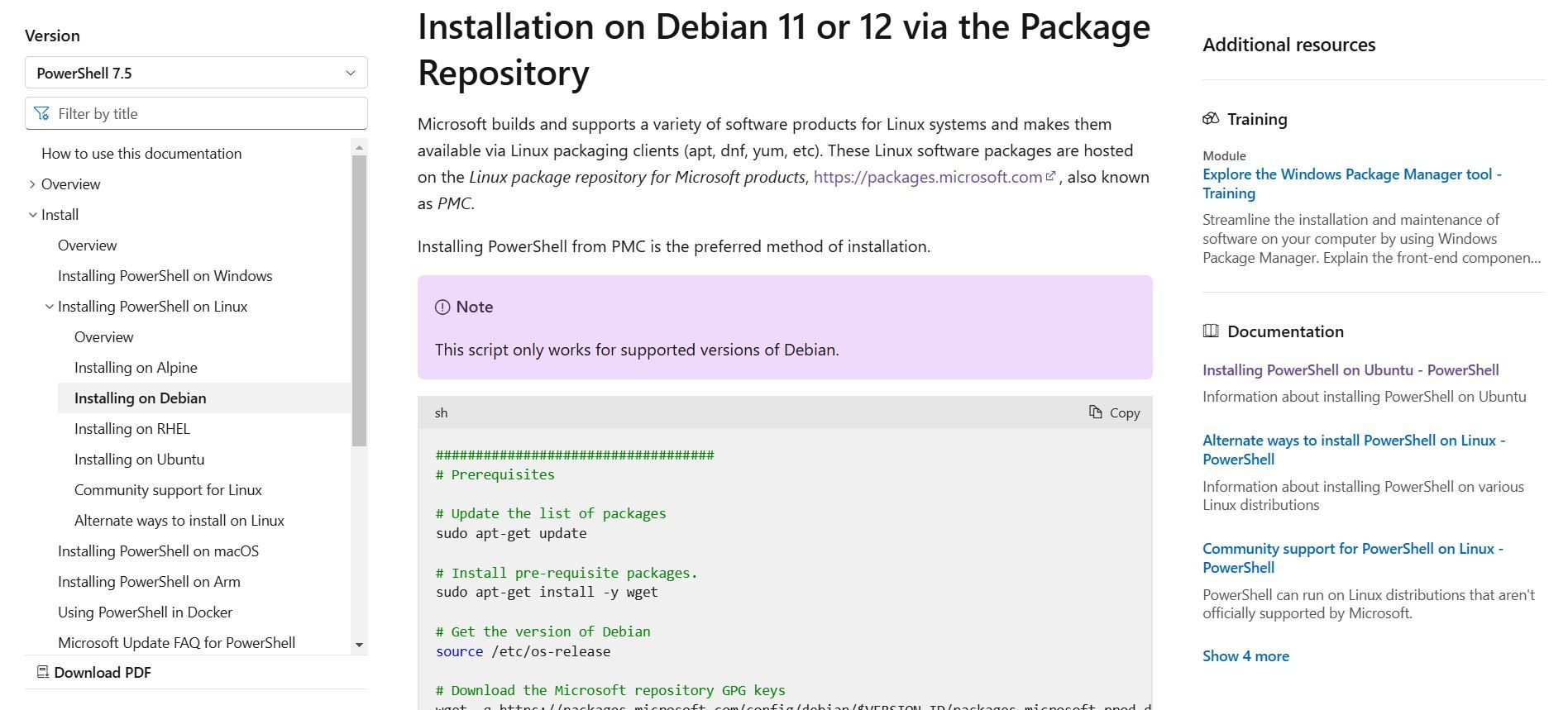
Microsoft Debian PowerShell installation page with copyable script.

Microsoft provides its own repositories for many popular distros, including the Red Hat Enterprise Linux Family and Debian/Ubuntu

Let’s install it for Debian. Microsoft helpfully provides a script you can copy and paste. They even have a button you can click to copy it into your clipboard.

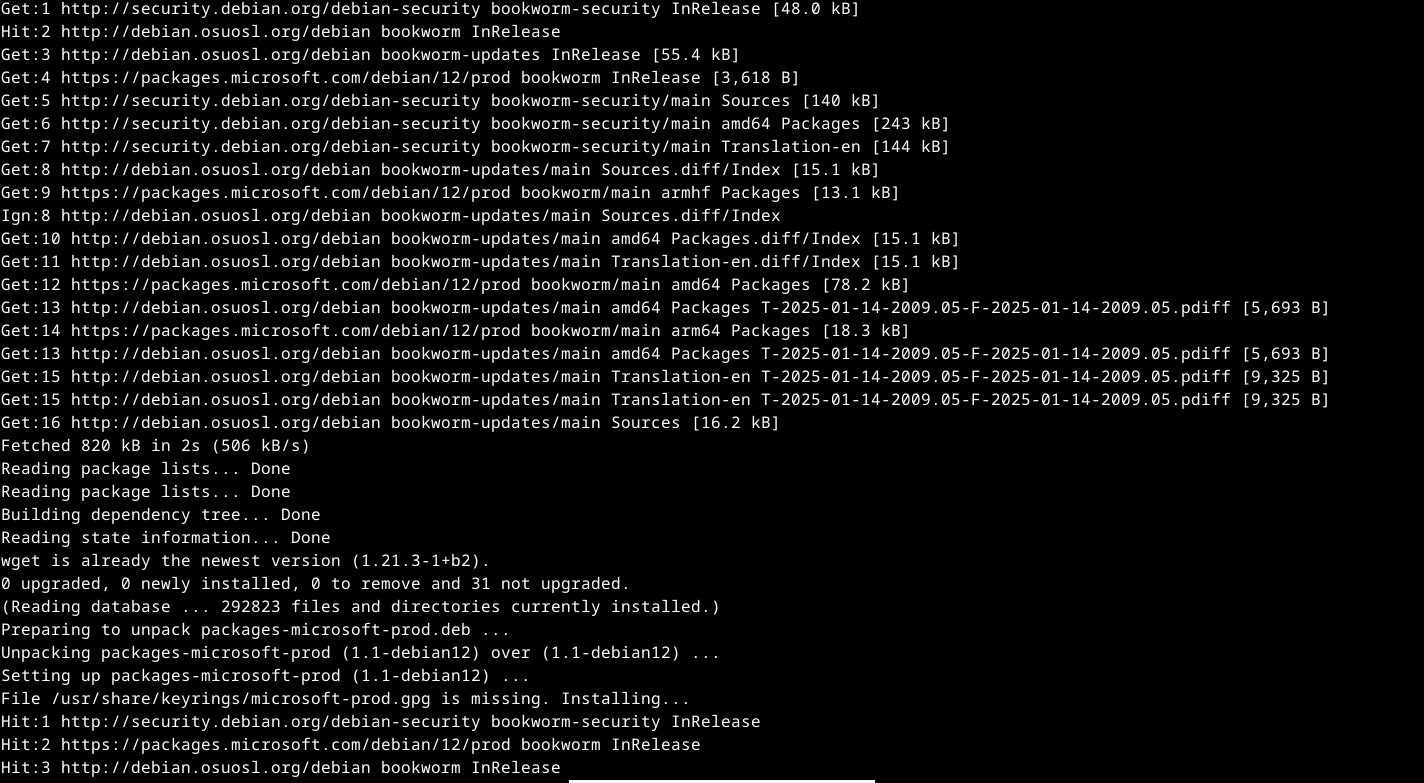
Paste the script into your terminal emulator, and it will install and run PowerShell.

Installation of PowerShell in the Debian terminal,

Micorosoft has similar instructions for most other popular Linux distros.

Starting PowerShell on Linux

Once you’ve gotten PowerShell installed you can run it. To do that, use this command:

pwsh

You’ll be using PowerShell interactively, as you would for your login shell. You can type regular commands into it.

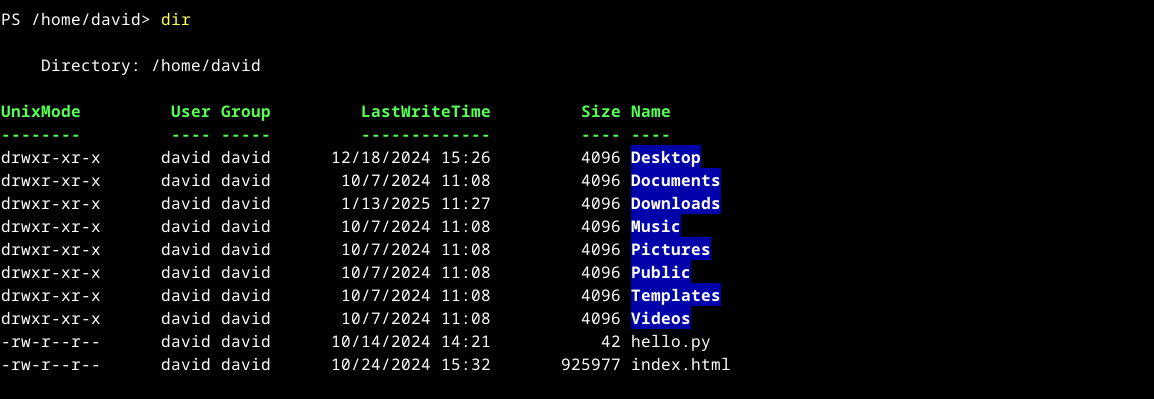
The ls command works as usual, but try using the “dir” command. You’ll see something different. You’ll see something similar to the output of the ls -l option, with the Linux permissions of the files in the left-hand column, user and group information, the last modified time, and finally the name of the files.

Output of the PowerShell "dir" command in Linux.

When you’ve finished with PowerShell, type “exit” or press Ctrl+d to end your session. If PowerShell is your login shell, this will close the window. If you’re running it from another shell, this will return you to the shell you called it from.

Changing Shells to PowerShell

If you want to change the Linux shell you use when you open a terminal window to PowerShell, it’s easy to do.

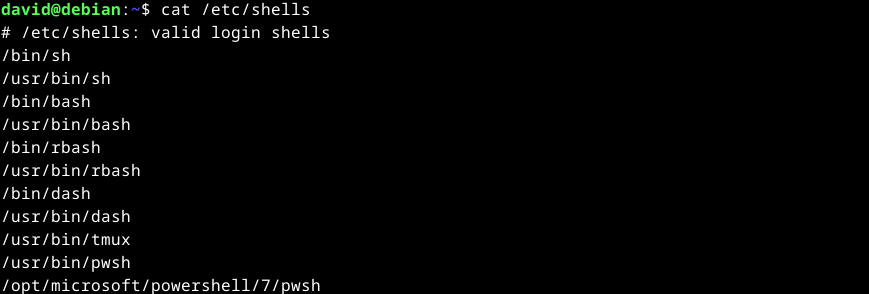
Powershell will have to be in the list of shells in the file /etc/shells. To see the list, use cat:

cat /etc/shells
Output of "cat /etc/shells" command in Linux.

You should see a line that contains “pwsh.” On this system, there are two of them: /usr/bin/pwsh and /opt/microsoft/powershell/7/pwsh. The first one seems like a better bet, since it doesn’t reference any version numbers and is less likely to break with updates.

Use the chsh command to change your login shell. You’ll need to enter your password when prompted. At the prompt, enter the pathname you want to use, in this case, /usr/bin/pwsh.

Press the Enter key and if it’s a valid shell in /etc/shells, you’ve just changed your login shell.

Log out and log back in, and start up a terminal window or virtual terminal, and you should be logged into PowerShell by default now.

If you’re writing PowerShell scripts, you can also specify Powershell by using the same paths with a shebang line. This is named because a shebang line starts with two characters: a hash (#) and an exclamation point (!), also known as a “bang.”

To call PowerShell from a script, we’ll use the same path we did earlier at the very first line in the script:


#!/usr/bin/pwsh

This should ensure that the script is run with PowerShell. You’re now ready to explore PowerShell in Linux.

Edge Workspaces

Sharing Edge Workspaces in Chrome

Microsoft Edge Workspaces are natively available in Microsoft Edge, but you can use a third-party extension to replicate this feature in Google Chrome. One such extension is “Edge Workspaces,” which is available on the Chrome Web Store. This extension allows you to organize and manage multiple projects or tasks by saving and restoring entire browsing sessions.

To use Edge Workspaces in Chrome:

  1. Install the extension from the Chrome Web Store.
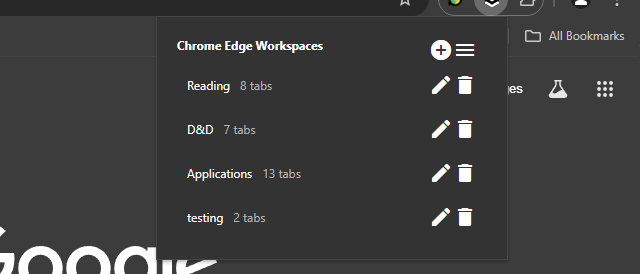
  2. Open the extension popup by clicking the icon in the toolbar.
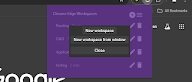
  3. Click the “+” icon to open the new workspace modal.
  4. Select either “New workspace” or “New workspace from window.”
  5. A new Chrome window will open with the New Tab page.
  6. As you work, all tabs in the current window will be saved to the workspace.
  7. Close the window when finished.

The extension also supports managing workspaces, such as renaming or deleting them, and saving workspaces as bookmarks. However, it’s important to note that changes to the bookmarks will not be reflected in the workspaces themselves, as they are just a copy.

Using Edge Workspaces on Chrome

Chrome extensions: Edge Workspaces

Overview

Effortlessly organize and manage multiple projects or tasks by saving and restoring entire browsing sessions.

Edge Workspaces empowers Chrome users with advanced tab management: * Preserve context: Save and restore entire browsing sessions * Reduce clutter: Keep your browser organized by project or task * Improve focus: Easily switch between different work contexts * Automatic saving: Never lose your place with continuous workspace updates * Keep in sync: Your workspaces stay in sync across computers via Google sync Install Edge Workspaces to take control of your tabs and boost your productivity. Ad-free and free to use, forever!

This extension is open source. Check out the GitHub repository: https://github.com/Elec0/chrome-edge-workspaces

## How to Use ##

## Creating a Workspace ##

  • 1. Open the extension popup by clicking the icon in the toolbar (pinning the extension is recommended).
  • 2. Click the “+” icon to open the new workspace modal.
  • 3. Select either “New workspace” or “New workspace from window”.
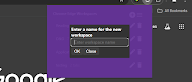
  • 4. Enter a name for the workspace.
  • 5. Click “OK”.
  • 6. A new Chrome window will open with the New Tab page.
  • 7. All tabs in the current window will be saved to the workspace as you work.
  • 8. Close the window when finished.

## Opening a Workspace ##

  • 1. Open the extension popup.
  • 2. Click on a workspace to open it.
  • 3. The saved tabs will be opened in a new Chrome window.

## Managing Workspaces ## – Click the trashcan icon to delete a workspace. – Click the pencil icon to rename a workspace.

## Saving Workspaces as Bookmarks ##

– Ensure “Save workspaces to bookmarks” option is checked in Settings. – Workspaces will now be copied to “Other bookmarks -> Edge Workspaces (read-only) -> [Workspace Name]”. – Note that changes to the bookmarks will **not** be reflected in the workspaces themselves, as they are just a copy. – When installing a new version, make sure to open old workspaces at least once to allow for them to be saved as bookmarks.

## Importing/Exporting Workspaces ##

  • 1. Open the extension popup.
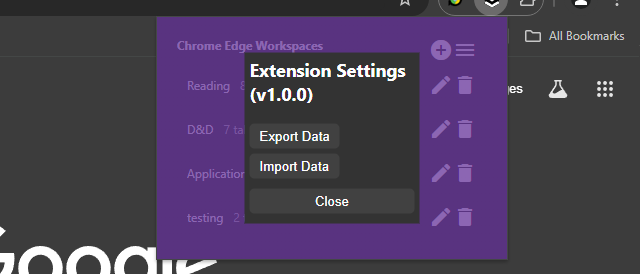
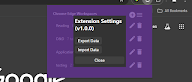
  • 2. Click the hamburger icon to open the settings window.
  • 3. Click “Export” to save all workspaces to a file.
  • 4. Click “Import” to load workspaces from a file.

### Changelog ###

## v1.2.0 ##

– Add syncing of workspaces across computers, when signed in to Google sync

## v1.1.0 ## – Add ability to save a copy of workspaces as bookmarks

Outlook Offline Address book

Determine whether the Autodiscover service is working, and check access to the Offline Address Book

Check whether Outlook and the computer can access the Offline Address Book file on the server. This action is typically done by Outlook in the background. It also happens when you force a download of the Offline Address Book in Outlook. To do this check, sign in to the Microsoft 365 portal, and then follow these steps:

  1. Start Outlook.
    • Hold down the CTRL key, right-click the Outlook icon in the notification area on the right side of the taskbar, and then click Test E-mail AutoConfiguration.
    • Click to clear the Use Guessmart check box, and then click to clear the Secure Guessmart Authentication check box.
    • Click to select the Use AutoDiscover check box.
    • Type the email address and password, and then click Test.
    • On the Results tab, note the path of OAB URL.
    • Click the XML tab, locate the <OAUrl> and </OABUrl> tags, and then copy the path that’s displayed between the tags. Paste the path into the address box in Windows Internet Explorer, add /OAB.xml to the end of the path, and then press Enter.


The following is an example of what the URL may resemble:

https://autodiscover.contoso.com/OAB/93179f28-4b4d-4e58-aec1-07bb493be4f4/OAB.xml

NOTE: The information that’s displayed in the webpage in Internet Explorer. The webpage should contain lots of XML data.

The figure below depicts an example of the information that should be displayed in Internet Explorer.

Troubleshoot Outlook Offline Address Book

Still need help? Go to Microsoft Community.